
Introduction
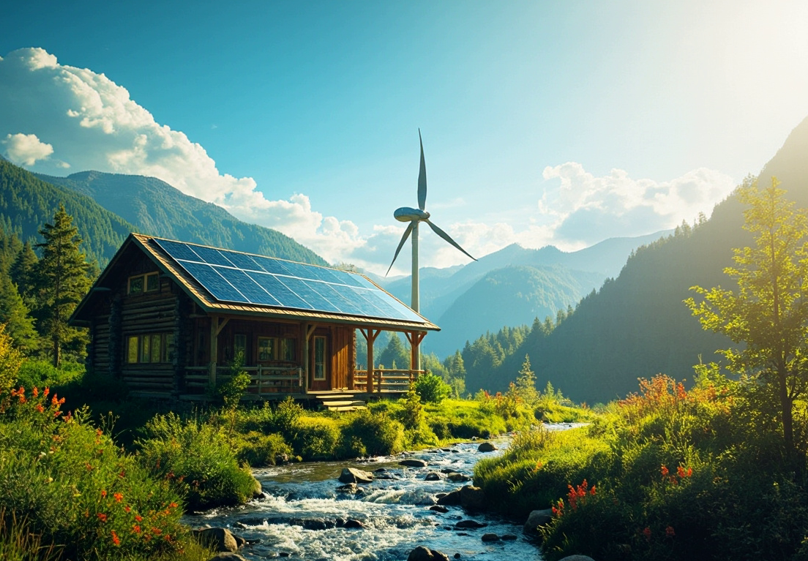
Living off the grid is no longer just a lifestyle for survivalists or remote cabin dwellers. It’s a growing movement fueled by the wish for independence. It is also driven by the craving for sustainability and resilience. As energy prices rise and climate concerns intensify, more individuals and communities are seeking alternatives to traditional, centralized power systems.
Off-grid power refers to generating and managing your own electricity without relying on the public utility grid. It’s a path to energy freedom, environmental responsibility, and financial control.
In this comprehensive guide, we will explore the major types of off-grid energy solutions, including:
- Solar Power – the most common and accessible option
- Wind Power – a strong companion or alternative to solar
- Micro-Hydro Power – ideal for specific terrains
- Biomass, Geothermal & Hybrid Systems – emerging and complementary sources
We will cover how to build a hybrid system and discuss essential components of a reliable setup. We will highlight common challenges and how to overcome them. We will also share real-world success stories to inspire your journey. Whether you’re starting small or planning a full energy transition, this guide is your first step toward total energy independence.
What Is Off-Grid Power and Why Does It Matter?
Off-grid power refers to the ability to generate and manage electricity independently from the public utility grid. This independence offers a range of benefits that go beyond just not paying electricity bills.
Benefits of Off-Grid Power
- Environmental Impact: Reducing reliance on fossil fuels and centralized grids helps lower carbon footprints and supports a cleaner, sustainable future.
- Financial Savings: While initial investment can be significant, long-term savings come from eliminating monthly utility costs and avoiding price volatility.
- Resilience and Security: Off-grid systems provide energy security during outages, natural disasters, or grid failures. This makes them crucial for remote locations or emergency preparedness.
Who Seeks Off-Grid Power?
- Remote Homeowners and Rural Communities who lack access to reliable grid infrastructure.
- Eco-conscious Individuals and Families aiming to reduce environmental impact.
- Survivalists and Preppers preparing for emergencies or societal disruptions.
- Businesses and Farms looking to reduce operating costs and improve sustainability.
Ready to explore the most common and versatile off-grid energy source? Let’s move on to Solar Power – The Cornerstone of Off-Grid Energy.
Solar Power – The Cornerstone of Off-Grid Energy
Solar power is by far the most popular and accessible option for off-grid energy. It harnesses sunlight using photovoltaic (PV) panels. These panels convert solar radiation into electricity. This makes it a clean and renewable energy source.
How Solar Power Works
- Solar Panels capture sunlight and convert it into direct current (DC) electricity.
- Inverters convert DC into alternating current (AC), which is used by most household appliances.
- Batteries store excess energy generated during the day to provide power during nighttime or cloudy days.
Types of Solar Systems
- Isolated Systems: Completely off-grid setups, not connected to the utility grid.
- Hybrid Systems: Combine solar with other power sources (like wind or diesel generators) and sometimes the grid.
- Grid-Tied Systems: Connected to the public grid, allowing energy exchange but less common for true off-grid living.
Advantages
- Renewable and abundant energy source.
- Scalable to different sizes and needs.
- Low operational costs once installed.
- Silent and requires minimal maintenance.
Limitations
- Dependence on weather and daylight availability.
- Initial investment can be significant.
- Battery storage is required for continuous power.
Cost and Return on Investment
The cost of a typical off-grid solar system varies widely based on its capacity and components. It usually ranges from $5,000 to $20,000 for residential setups. However, savings on electricity bills can significantly reduce costs. Potential incentives can also lead to a full return on investment within 5 to 10 years.
For a deeper comparison, see Wind Power – Harnessing the Breeze.
Wind Power – Harnessing the Breeze
Wind power is a powerful complement or alternative to solar energy, especially in regions with consistent wind patterns. It captures kinetic energy from wind using turbines to generate electricity.
How Wind Turbines Work
Wind turbines convert the wind’s kinetic energy into mechanical energy through rotating blades. This mechanical energy is then transformed into electricity by a generator.
Types of Wind Turbines
- Horizontal-Axis Turbines: The most common type, with blades rotating around a horizontal axis.
- Vertical-Axis Turbines: Less common but can operate in turbulent wind conditions and are often used in smaller-scale applications.
Geographic Considerations
Effective wind power needs locations with steady, strong winds. These winds typically average at least 4 to 5 meters per second (9 to 11 mph). Coastal areas, hilltops, and open plains are ideal.
Cost-Benefit Comparison with Solar
Wind systems often have higher upfront costs than small solar setups. However, they can produce energy consistently during the night and on cloudy days. This is when solar panels are less effective. However, maintenance can be more demanding due to moving parts.
When to Invest in Wind Power
- When your site has strong, reliable wind speeds.
- If you want to diversify your energy sources to increase reliability.
- To complement solar energy in hybrid systems for continuous power supply.
Interested in exploring another renewable source? Check out Hydro Power – The Hidden Gem for Some Terrains.
Hydro Power – The Hidden Gem for Some Terrains
Hydro power is an often overlooked source of off-grid energy. It is highly efficient, especially in the form of micro-hydroelectric systems. This is true for locations with access to flowing water.
What Is Micro-Hydroelectric Power?
Micro-hydroelectric systems use the kinetic energy of flowing water—such as streams or small rivers—to generate electricity. Water flow turns a turbine connected to a generator, producing a continuous supply of power.
Ideal Conditions for Hydro Power
- A consistent and reliable flow of water throughout the year.
- Suitable elevation drop (head) to provide enough water pressure.
- Locations near natural waterways like rivers, streams, or irrigation canals.
Advantages
- Provides a constant and reliable power supply regardless of weather conditions.
- Often higher efficiency compared to solar and wind.
- Low operating costs once installed.
Challenges
- Limited to sites with suitable water flow.
- Potential environmental impact if not properly managed.
- Initial setup can be costly and complex, requiring permits and professional assessment.
For those interested in combining different sources, the next section provides valuable insights. It covers Other Emerging Sources: Biomass, Geothermal & Hybrid Systems.
Other Emerging Sources: Biomass, Geothermal & Hybrid Systems
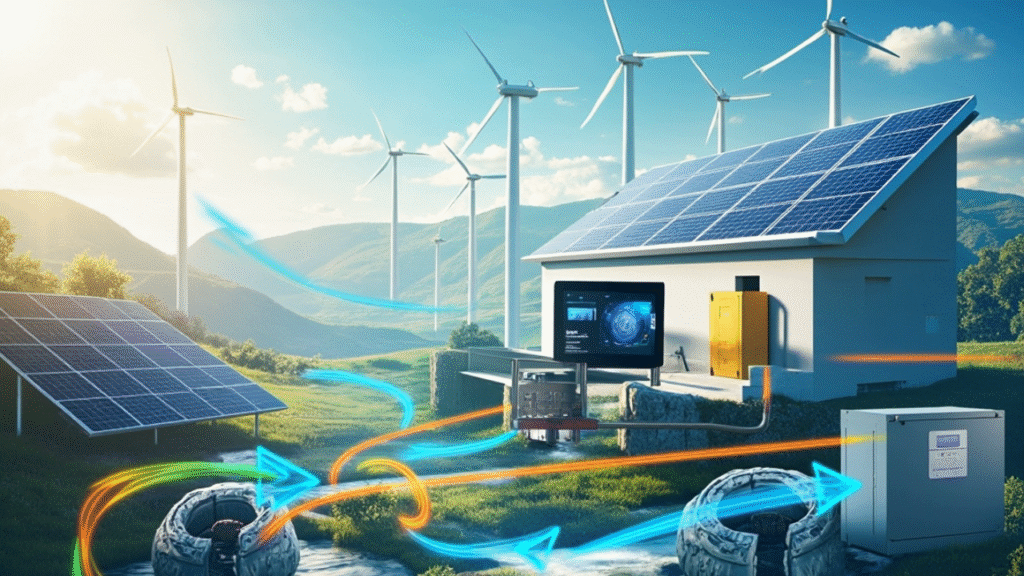
Beyond the well-known solar, wind, and hydro power, other energy sources are gaining attention in off-grid applications. They offer unique advantages in specific contexts.
Biomass Energy
Biomass energy is generated from organic materials such as wood, agricultural residues, and animal waste. Through combustion or conversion processes, biomass can produce heat, electricity, or biofuels.
- Ideal for rural areas with abundant organic waste.
- Can provide both power and heating solutions.
- Requires careful management to ensure sustainability.
Geothermal Energy
Geothermal systems tap into the Earth’s internal heat to provide consistent heating and electricity generation.
- Best suited for regions with accessible geothermal resources.
- Offers continuous, stable energy output regardless of weather.
- Installation can be expensive but cost-effective long-term.
Hybrid Systems
Combining multiple energy sources can significantly improve efficiency and reliability.
- Hybrid systems integrate solar, wind, hydro, biomass, or geothermal.
- They balance intermittent generation by leveraging complementary sources.
- Increase resilience and reduce the need for large battery storage.
For practical guidance on putting these pieces together, see Building a Hybrid Off-Grid Power System.
Building a Hybrid Off-Grid Power System
Integrating multiple energy sources into a hybrid off-grid system maximizes efficiency, resilience, and energy availability.
Why Build a Hybrid System?
- Enhanced Reliability: Different sources compensate for each other’s intermittency (e.g., solar works during the day, wind at night).
- Improved Efficiency: Optimizes energy generation by leveraging site-specific resources.
- Reduced Storage Needs: Less dependence on batteries by balancing supply from various sources.
How to Integrate Multiple Sources
- Use a centralized control system to manage energy inputs and outputs.
- Employ smart inverters and charge controllers compatible with different generation methods.
- Design the system based on load requirements, resource availability, and future scalability.
Practical Examples
- A rural home combining solar panels with a small wind turbine and battery bank.
- A remote community using micro-hydro alongside solar arrays and biomass generators.
- Farms integrating geothermal heating with solar-powered water pumping.
For detailed information about the critical parts of your off-grid setup, see Key Components of a Functional Off-Grid Setup.
Key Components of a Functional Off-Grid Setup
A reliable off-grid power system depends on several critical components that work together to generate, store, and manage electricity efficiently.
Batteries
- Store excess energy generated during peak production.
- Common types include lead-acid, lithium-ion, and flow batteries.
- Battery capacity and lifespan are key considerations.
Charge Controllers
- Regulate the flow of electricity from energy sources to batteries.
- Prevent overcharging and deep discharging, which can damage batteries.
- MPPT (Maximum Power Point Tracking) controllers improve solar panel efficiency.
Inverters
- Convert stored DC electricity into AC power usable by household appliances.
- Pure sine wave inverters provide clean, stable power for sensitive electronics.
- Some inverters combine inverter and charger functions.
Monitoring and Automation Systems
- Allow real-time tracking of system performance and energy usage.
- Enable automated control of loads and generation to optimize efficiency.
- Help detect faults early to reduce downtime.
Safety and Maintenance
- Proper grounding, fuses, and circuit breakers ensure system safety.
- Regular inspection and maintenance prolong component lifespan and system reliability.
If you want to learn how to tackle common obstacles in off-grid living, explore common challenges. Find out how to overcome them.

Common Challenges and How to Overcome Them
Despite its many benefits, living off-grid comes with specific challenges that require planning and proactive management.
Storage Limitations
- Battery capacity can limit energy availability during extended cloudy or windless periods.
- Solution: Invest in high-quality batteries and consider hybrid systems to diversify energy sources.
Weather Dependence
- Solar and wind power are intermittent and affected by climate variability.
- Solution: Use energy forecasting tools and combine multiple sources to ensure consistent supply.
Maintenance Requirements
- Components like batteries, inverters, and turbines need regular upkeep.
- Solution: Schedule routine inspections, clean panels, and monitor system performance remotely.
Initial Costs
- High upfront investment can be a barrier.
- Solution: Start with a scalable system and expand gradually; research available incentives or financing options.
To avoid common pitfalls, check our article. It is titled 7 Common Off-Grid Energy Mistakes to Avoid.
Ready to see how this works in real life? Continue to Real-World Examples of Off-Grid Success.
Real-World Examples of Off-Grid Success
Learning from those who have successfully transitioned to off-grid living provides invaluable insights and inspiration.
Case Study 1: Rural Family in the Pacific Northwest
- Installed a hybrid solar-wind system with battery storage.
- Reduced their energy bills to zero and became fully energy independent.
- Faced initial challenges with system sizing but overcame them with expert consultation.
Case Study 2: Remote Eco-Village in Europe
- Uses micro-hydro power combined with biomass heating.
- Community shares resources and maintenance responsibilities.
- Achieved a high level of sustainability and resilience, even during grid outages.
Case Study 3: Small Farm in South America
- Adopted solar panels with a backup diesel generator.
- Gradually phased out fossil fuels by adding wind turbines and batteries.
- Now powers irrigation, refrigeration, and household needs entirely off-grid.
These stories illustrate how off-grid power solutions can be tailored to different environments and lifestyles. To start planning your own system, see Where to Start – A Beginner’s Path to Energy Independence.
Where to Start – A Beginner’s Path to Energy Independence
Starting your journey to energy independence may seem overwhelming, but breaking it down into manageable steps makes it achievable.
Step 1: Assess Your Energy Needs
- Calculate your average daily electricity consumption.
- Identify essential loads versus optional ones to prioritize.
Step 2: Evaluate Your Site’s Resources
- Measure sunlight exposure, wind patterns, and water flow if applicable.
- Use online tools or consult local experts.
Step 3: Start Small and Scale Up
- Begin with a basic solar kit or a small wind turbine.
- Add batteries and additional power sources as your budget and needs grow.
Step 4: Plan Your Budget and Timeline
- Set realistic goals and prepare for upfront costs.
- Consider financing options and government incentives.
Step 5: Know When to Hire Experts
- For system design, installation, and permits, professional help ensures safety and compliance.
- Use DIY approaches only when confident in your skills.
Ready to dive deeper? Check out our Related Resources You Might Find Helpful.
Related Resources You Might Find Helpful
To deepen your knowledge and support your off-grid energy journey, check out our related articles on Museglobe:
- 7 Common Off-Grid Energy Mistakes to Avoid
- Understanding Battery Banks: Storage Solutions Explained
- Solar vs Wind vs Hydro: Which Off-Grid Power Source is Best for You?
These supplemental contents provide essential information to avoid common mistakes. They help you choose the right equipment. They also help you decide on the best energy source for your specific situation.
To continue, see our conclusion in Your Path to Energy Freedom Starts Here.
Your Path to Energy Freedom Starts Here
Achieving energy independence is more than a technical achievement—it’s a commitment to autonomy, sustainability, and the future of our planet.
By investing in off-grid systems, you’re reducing your costs. You’re also minimizing your environmental impacts. Additionally, you’re building a more resilient and autonomous life. This life can withstand unexpected events and changes.
Remember: the path may seem daunting at first. However, with planning, knowledge, and the right choices, energy freedom is within your reach.
Explore, learn, and start transforming your reality today. The clean, decentralized energy revolution is an opportunity for all of us.
To recap, be sure to check out our in-depth sections and related resources to guide you safely and efficiently.
Your journey to energy independence starts here.